Grub Street’s Manuscript Mart 2026!
Thanks to Grub Street, this past May I met with 6 critics who gave me excellent feedback. Among them: Jane Chun, with Transatlantic Agency. And Andrew Grace, a Senior Editor at the Kenyon Review. Thank you!
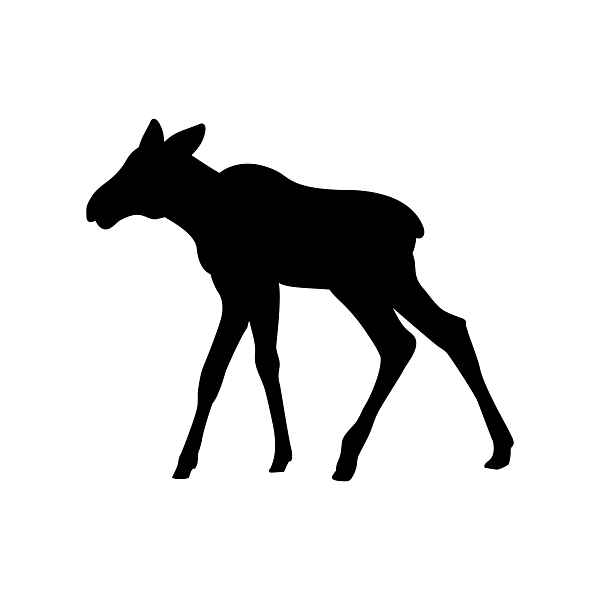
Moose Crossing is a literary middle grade novel set in a world reshaped by climate change. It follows four unlikely animals—a young black bear, an orphaned moose, a barnyard pig, and a prickly fox—whose separate paths converge as they journey north across a landscape of flood and fire, drought and deadly heat. It all begins when Tarlak, a tender-hearted bear, is woken too early from hibernation by a sudden thaw.
Tarlak opens crusty eyes and stretches his cramped legs. Then he scratches his head with a sharp claw. How long has he been down here? It’s hard to tell. But it was autumn when he crawled inside his den, and he must have slept straight through the wintertime.
Hurray! It’s springtime at long last!
The black bear yawns, then yawns again. He likes it down here in his hole. So why not take just one more nap? He curls up on his bed of twigs and leaves, but the light that pours down from the world outside is far too bright for him to sleep.
Trying to block it out, Tarlak rolls over, toward the curved earth wall. That helps a little bit. But a breath of springtime air is tickling his nostrils now. It’s supposed to smell of newly growing things. Of life returning to the woods. But all he smells is his own dirty fur.
Wait…what’s that dripping sound?
He pricks his ears. It must be raindrops trickling off the tree that stands watch above his den. Tarlak licks his lips and crawls forward, through the tunnel that he dug between the roots of the old oak. Then, pushing aside some dried-up weeds, he pokes out his cobwebby head.
Now just a minute. The black bear squints. What happened to the rain? That sky is definitely blue. And the daylight is so dazzling, he has to turn his gaze down toward the ground. But that too hurts his eyes, because it’s buried under bright white snow.
That’s odd. No, it’s worse than odd. It’s wrong. Shouldn’t he be seeing grass? He’d been hoping for at least a few short stalks thrusting through the slush. But there’s no greenery to be seen. Surely, spring has come by now. The mosquitos certainly think so. Tarlak swipes at them as they buzz around his head. But they’re far too fast for him to catch.
And that dripping…must be melting snow. He glares up at the oak. Suddenly, a downy woodpecker calls a greeting from above, and the sound warms Tarlak’s heart. It’s been so long since he’s heard birdsong.
He tilts his head back for a better look. And there she is, perched high up in the tree. Then all at once a whoosh of slush slides off a branch, right into his eyes. Tarlak shakes it off and glances up again. “Good morning!”
“Good morning to you, too,” replies the black-and-white flecked bird. “But why are you leaving the safety of your den?”
“Uh…why shouldn’t I?”
“Because,” the bird chirps out a laugh, “it’s still wintertime.”
“No, no. That can’t be right.” He shuts his eyes, then opens them again. “You see, I just woke up. And that means it’s definitely spring!”
“You might think so, since it’s nice and warm.” The woodpecker glides down to a branch just above the black bear’s head. “But I’m afraid there’s been an unexpected thaw.”
Tarlak grunts. An unexpected thaw? That makes no sense. Yet all around him in the woods, the trees look almost black without their leaves. Stark against the melting snow. Maybe the little bird is right, and it only seems like spring.
“Okay, okay.” He rubs his face with his forepaws. “So now what should I do?”
“That’s a good question.” She peers down with a beady eye. “You’ll just have to adapt.”
Adapt? Adapt how? The black bear sighs. Then his stomach growls, and all at once, he’s hungry. That settles it. He braces his forelegs on the snowy ground. “It might not be springtime yet, but I’m going to take a look around.”
“Be careful, bear,” the woodpecker trills as she flits back up the tree. “When the weather can’t be trusted, watch your back.”
Tarlak tracks her flight until she disappears into the upper branches of the oak. Regrettably, she has a point. But he’s hesitated long enough. So he takes a breath and with one heave hauls himself out of his hole.
Hey, look at that. He’s clearly thinner than he was when he squeezed in. No wonder his stomach growled.
Taking his bearings, Tarlak turns in a circle. He hasn’t seen this forest since last fall, and at first he can’t tell where he is. Then he nods. Of course. There are the silver trunks of birch, right by those skinny poplar trees. And behind him is that stand of beech, a smattering of pine, and more red oak.
It’s a lovely place to be.
Isn’t it?
He tests his legs and cautiously stands up on his paws—only to lurch forward and almost fall back on his rump. Oh well. Tarlak tries again. And after a few more wobbly steps, he gradually regains the steady rhythm of his walk that he knows so well. Then he finds a patch of snow and rolls in it.
Ahh. Tarlak grins.
It’s still pretty good to be a bear.
And wouldn’t it feel wonderful to scratch his back against the bark of the old oak? He ambles over to the tree and leans against it, moving up and down, then left and right. He could do this all day long. But first things first! What about some food?
So Tarlak digs beneath the snow and takes a bite of soggy grass. It’s slimy on his tongue. He spits it out. Then he flips over a rock slab, and hiding underneath are the squirmy insects he so loves. He licks them up, one by one. But they won’t fill his belly. That’s for sure.
What else can a black bear eat?
Maybe he’ll find some nuts left over from autumn. Or maybe the fish have woken from their sluggish dreams down at the bottom of the rivers and the streams.
If it’s warm enough to wake Tarlak in his den, surely this winter thaw will lure them to the surface, too. He waves his nose from side to side, tasting the air for smells.
Yes. Water is flowing not too far ahead.
Tarlak follows the scent, his body snapping twigs off trees as he lumbers by. Squirrels call warnings back and forth, announcing his approach. He groans. It’s too bad he scares away so many animals. He doesn’t mean them any harm. But he can’t blame them. Some black bears can be cruel.
That fateful day when his mother drove him off—for his own good, supposedly—she said he might be killed by full-grown males if he didn’t leave her side.
That’s when he decided he would never act that way.
No, he’d grow up to be a gentle bear.
The idea of hurting anyone makes Tarlak flinch. Instead he forages for berries, nuts and tender leaves. But those little scrumptious bugs—and fish, of course—are different.
Tarlak can’t resist them. Not one bit.
The water’s closer now. He can hear it rushing by its banks. Picking up his pace, he rounds a bend and peers into the gurgling stream. Then he sticks in a forepaw and spears a trout. This is exactly what his hungry stomach needs. He eats and eats. And gradually, the daylight turns to dusk and darkness falls.
But the black bear lingers by the stream, enjoying each delicious fish. It’s much harder now to see them swimming by, but he can smell them.
Yes, he can.
Letting out a burp, he looks up at the rising moon.
What kind of strange new world is it shining down upon?
Suddenly, a shadow shifts, and Tarlak stills. It shifts again, and he draws in a shaky breath. He waits. Nothing moves. Another beat. Then he shrugs and turns back to the stream.
There are things he’ll never understand. Like this weather.
Still, if times are changing…he’ll just have to change, too.
And for that, his belly should be full.
So he leans down for one last wriggling fish.
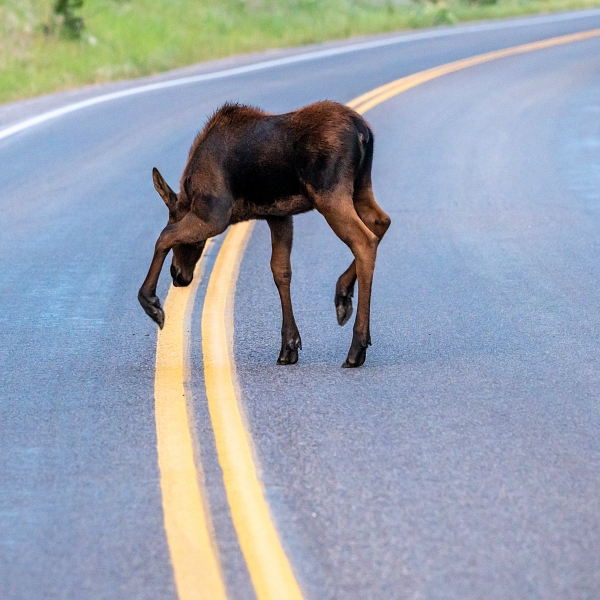
Thanks to Grub Street, this past May I met with 6 critics who gave me excellent feedback. Among them: Jane Chun, with Transatlantic Agency. And Andrew Grace, a Senior Editor at the Kenyon Review. Thank you!
I was lucky enough to attend this literary conference, held via Zoom in May of 2025. I met with 7 agents for 20 minutes each and received excellent feedback on my novel. Let me shout out in particular to Leslie Zampetti, the literary agent who founded Open Book Media, as well as to Jennifer Chen Tran, with Glass Literary Management.
I’ve recently joined the Boston Athenaeum Writing Group, and I’m looking forward to my first critique in about a week! Let’s hope they like Moose Crossing.
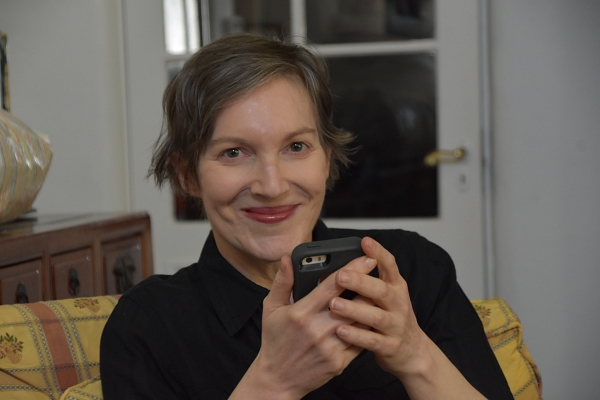 My name is Jenny Attiyeh, and I began my career in 1987 in London as a freelance reporter on the arts for the BBC World Service Radio. I remember my first interview for “Meridian”, as the program I worked for was called. It was with Placido Domingo, and I’ve never been so nervous since.
After my work permit ran out, I returned to Los Angeles, my home city, and continued as an arts reporter for KCRW, an NPR station in Santa Monica. While there, I reported and produced an award-winning documentary on Japanese-American internment during World War II.
Shortly after, I was accepted to a National Public Radio residency, which brought me to Washington, D.C. and to WBUR, an NPR station in Boston to report stories for NPR’s Performance Today. I later attended the Graduate School of Journalism at Columbia University.
After that, I remained in New York City for 9 years, during which time I worked primarily as a reporter for television and radio. I covered local politics and the arts for NY1 News, a cable television station , and then moved on to WNYC radio, where I worked in the news department, covering mayoral politics.
I next hosted and produced a weekly arts and culture segment for WNYC TV, a PBS station, until it went out of business. Before the lights went out, I managed to produce a mini-documentary on the making of a Philip Glass opera, “Les Enfants Terribles.” I worked next as a correspondent for a nationally televised PBS program called “Freedom Speaks” which focused on the media, until it too was taken off the air. (I detect a pattern here…)
I then moved to Maine, where I lived by the harbor in Kittery, and worked as a reporter for New Hampshire Public Television. There, I covered the ’99/2000 New Hampshire presidential primary season, and interviewed the major presidential candidates. I also participated as a panelist in nationally televised presidential debates, hosted by Peter Jennings and Tim Russert.
Following the conclusion of the New Hampshire primary season, I moved to Boston, where I did freelance writing on academics, the 2004 presidential campaign and the single life, among other subjects. From this base, in early 2005, I launched ThoughtCast. ThoughtCast is an ideaspace for interviews with authors, academics and intellectuals, hosted by Jenny Attiyeh. We partnered with The Forum Network, a PBS/NPR site devoted to academic content, and Harvard University Extension School.
Then, after a long career as a reporter in public television, public radio, podcasting and print, I decided to cross the dividing line between fact and fiction. So now I’m writing a novel, Moose Crossing, and it’s proving to be the most challenging assignment so far – and the most rewarding.
Thanks to Grub Street, this past May I met with 6 critics who gave me excellent feedback. Among them: Jane Chun, with Transatlantic Agency. And
I was lucky enough to attend this literary conference, held via Zoom in May of 2025. I met with 7 agents for
I’ve recently joined the Boston Athenaeum Writing Group, and I’m looking forward to my first critique in about a week! Let’s hope they like Moose
Today, I meet with four more agents — Reiko Davis with DeFiore and Company, Jennifer Chen Tran, with Glass
I am lucky enough to be attending Grub Street’s respected writer’s conference, The Muse and the Marketplace, 2024. Today, I met with
I will be representing Moose Crossing at the Society for Children’s Book Writers and Illustrators (SCBWI) annual winter conference in New York City in February